
Eu in Korean: the Vowel ㅡ (으)
ㅡ is the Korean vowel 으 (eu): eu, with spread, flat lips. See where ㅡ sits in a block, with 슬리퍼 and 그림; trace ㅡ in 1 stroke, print the ㅡ worksheet.
What is Eu in Korean, the Korean vowel ㅡ?
Eu in Korean is ㅡ, the vowel called 으, read eu, with spread, flat lips. ㅡ is placed below the consonant because it is a flat, horizontal vowel; writing it takes 1 stroke. You will hear it in 슬리퍼 (slippers) and 그림 (picture).
Eu in Korean ㅡ: sound, strokes, place and mirror pair
ㅡ Eu in KoreanKorean vowel · basic
ㅡ is read eu; it sits below the consonant.
ㅡ (Eu) at a glance
| Fact | Value |
|---|---|
| Name | 으 (eu) |
| Sound | eu, with spread, flat lips |
| Sits | below the consonant |
| Strokes | 1 |
| Type | plain vowel |
| Example words | 스웨터 (sweater), 슬리퍼 (slippers) |
Two ways to remember ㅡ
 Shape
 Words with ㅡ
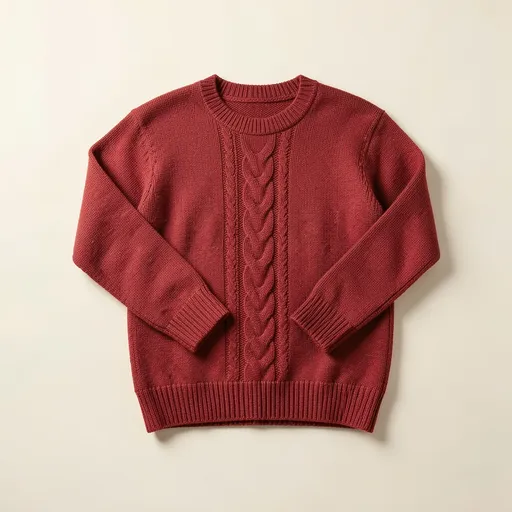

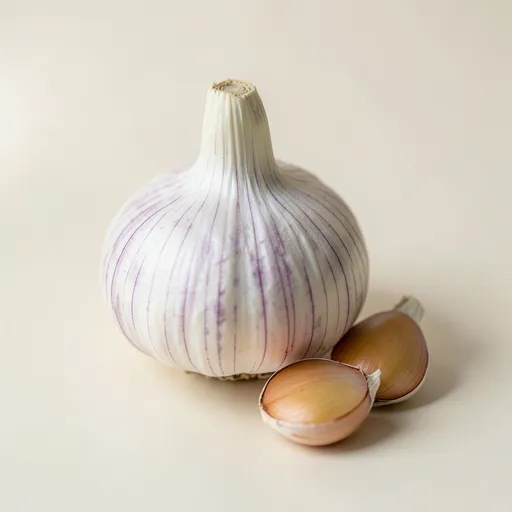
How to say ㅡ
으Spread the lips as if smiling and pull the tongue back without rounding. ㅡ is like saying 'oo' with flat lips; English has no exact match.
ㅡ (eu) is a horizontal vowel and sits under the consonant: 그림 (picture), 음식 (food). Korean also adds ㅡ to break up English consonant clusters, as in 스 of 스웨터.
Where ㅡ sits in a block
How to write ㅡ
Trace Eu in Korean ㅡ with a finger, mouse or pen: start at the numbered dot, follow the dotted arrow, and press Clear to try again.
Print style 정자체
Follow the numbers and dotted arrows
Handwriting 필기체
Same stroke order as print style
Draw a long horizontal line from left to right.
Count one stroke to complete ㅡ.
Loanwords give lots of ㅡ practice because it fills gaps between consonants: 크림 (cream), 뉴스 (news), 스웨터 (sweater). Say them without rounding the ㅡ.
ㅡ and its look-alikes
| Letter | Name | Sound |
|---|---|---|
| ㅡ | 으 (eu) | eu, with spread, flat lips |
| ㅜ | 우 (u) | oo, as in moon |
으 and 우 differ only in the lips: flat for 으, rounded for 우. Watch your mouth in a mirror as you switch between 그 and 구.
Learners often round the lips and say 으 like 우, so 그림 turns into 구림. Keep the lips spread flat for the whole vowel.
A word pair shows the contrast: 그 (that) versus 구 (nine). With ㅡ (eu), in the first word the vowel is ㅡ (eu), in the second it is ㅜ.
Why ㅡ looks the way it does
In the case of ㅡ (eu), in the first design of Hangul the vowels grew from three shapes: a dot for the sky, a flat line for the earth and a standing line for a person. ㅡ (eu) is one of the plain vowels made from those building blocks.
Words that use ㅡ
| Word | Reading | Meaning |
|---|---|---|
| 치즈 | chi-jeu | cheese (noun) |
| 아이스크림 | a-i-seu-keu-rim | ice cream (noun) |
| 파인애플 | pa-in-ae-peul | pineapple (noun) |
| 끝 | [끋] kkeut | end (noun) |
The first block of 슬리퍼 (slippers) is 슬, built as ㅅㅡ + ㄹ and read seul; the vowel is ㅡ.
The first block of 그림 (picture) is 그, built as ㄱㅡ and read geu; the vowel is ㅡ.
The first block of 글 (writing) is 글, built as ㄱㅡ + ㄹ and read geul; the vowel is ㅡ.
The second block of 이름 (name) is 름, built as ㄹㅡ + ㅁ and read reum; the vowel is ㅡ.
In 흙 (soil), ㅡ sits in the first block 흙, which is ㅎㅡ + ㄺ and is read heuk.
Syllables you can build with ㅡ
Pair ㅡ (eu) with the fourteen basic consonants and you get a row that begins 그 (geu), 느 (neu), 드 (deu), and 르 (reu); only the front of the block changes.
ㅡ (eu) is easiest to hear by reading the whole row aloud, once for every opening position.
Try it yourself

Change the first consonant and read the block that ㅡ makes, such as 으. Open the syllable builder with ㅡ ready
ㅡ with a final consonant
Under the silent ㅇ and ㅡ, six common finals give 윽 (euk), 은 (eun), 을 (eul), 음 (eum), 읍 (eup), 응 (eung).
Listen for ㅡ (eu) in the middle of each block, because it keeps its shape while the final consonant closes the sound.
Add ㄱ under 으 and you get 윽 (euk), closing on a quiet k. Add ㄴ under 으 and you get 은 (eun), closing on a hummed n. Put ㄹ at the bottom of 으 for 을 (eul), closing on a tongue-tip l.
Put ㅁ at the bottom of 으 for 음 (eum), closing on a lip-closed m. Put ㅂ at the bottom of 으 for 읍 (eup), closing on a lip-closed p. Put ㅇ at the bottom of 으 for 응 (eung), closing on the ng of song.
ㅡ writing worksheet (free printable)
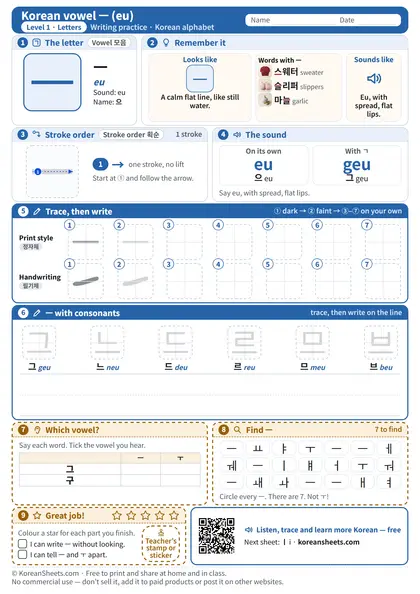
Worksheet · Level 1 · Letters
Korean letter tracing worksheet: ㅡ (eu)
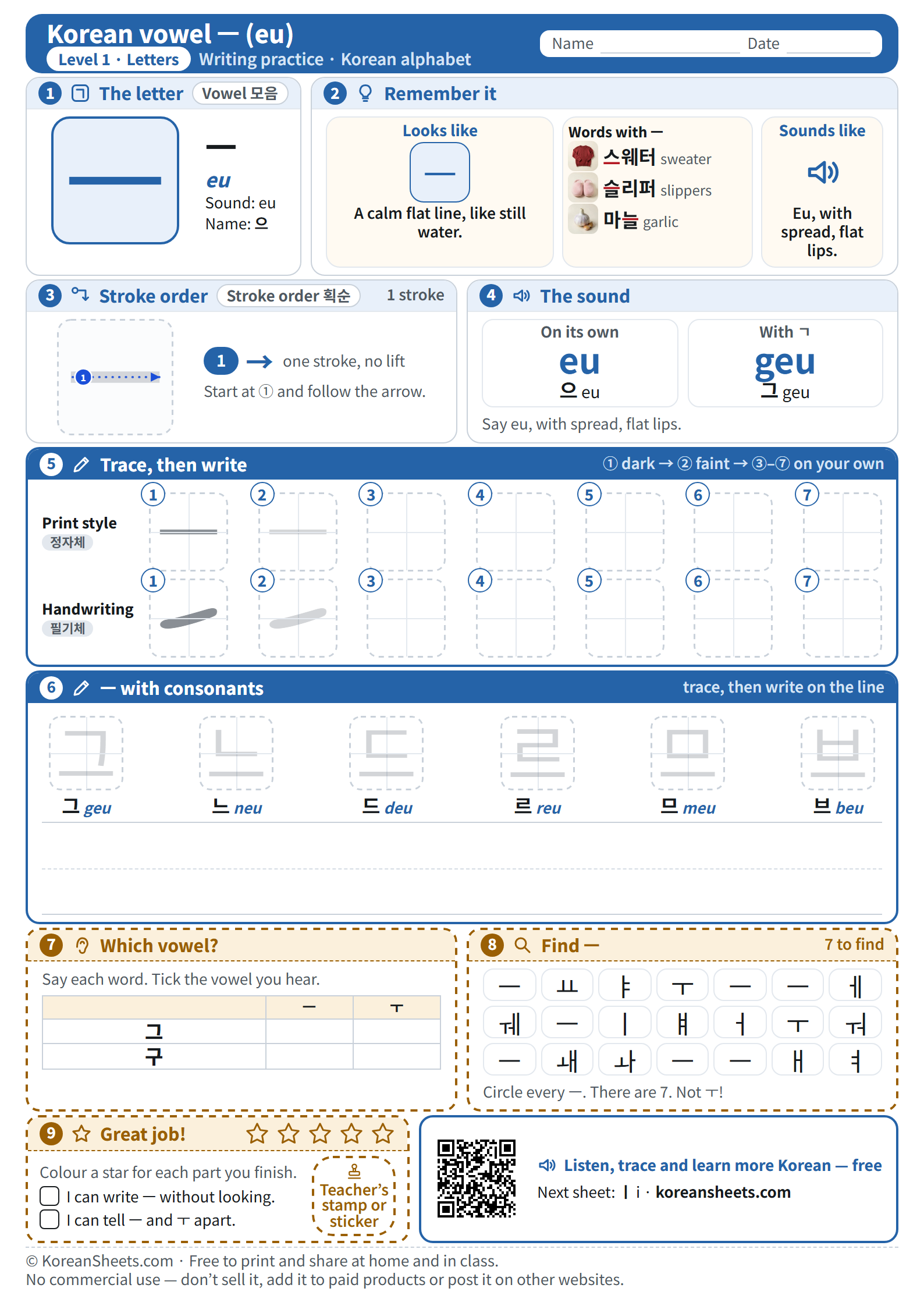
The one-page Eu in Korean ㅡ sheet shows ㅡ in 1 stroke, traces it, writes it with six consonants (그 느 드 르 므 브) and ends with a game of finding ㅡ among look-alikes.
- 1 page
- A4 · US Letter
- PDF · 100 KB
- Free · no sign-up
Want more? Get a printable pack of Hangul letters
Worksheet information
- How to use
- Say ㅡ out loud, trace its 1 stroke, then write it with six consonants.
Practice ㅡ
Try it yourself
Put Eu in Korean ㅡ, eu, into the builder and read the block it makes. Open the syllable builder with ㅡ ready
ㅡ (Eu in Korean) — FAQ
How would you describe the ㅡ pronunciation?
Aim for eu, with spread, flat lips; keep the lips spread flat while you practice 으 and 슬리퍼.
How do you write ㅡ and which position does it take in a syllable block?
ㅡ takes 1 stroke: One stroke: draw a long horizontal line from left to right. In a block it sits below the consonant.
How many strokes do you need to write ㅡ?
ㅡ has 1 stroke: a single horizontal line from left to right.
Last updated: